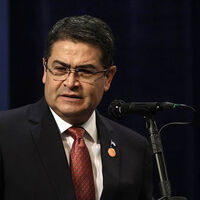


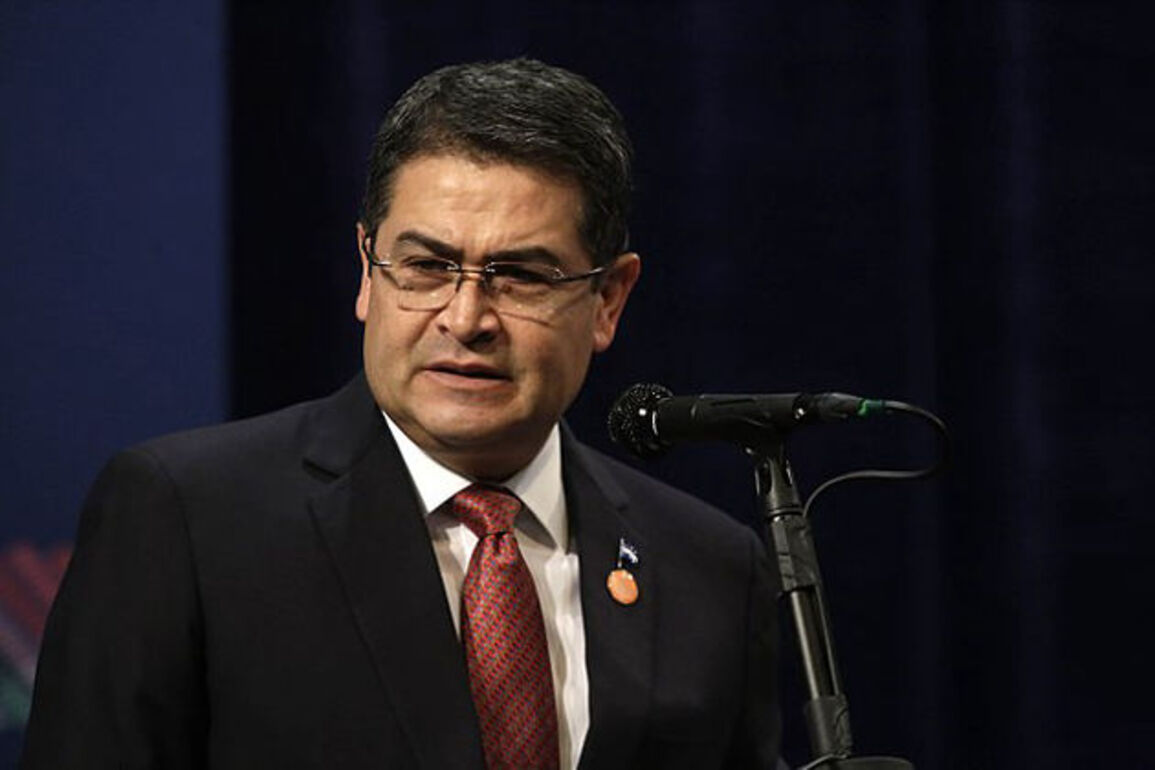
WASHINGTON, D.C.: Honduran President Juan Orlando Hernández, who was serving a 45-year sentence for conspiring to import tons of cocaine into the United States was released this week from the high security prison of USP Hazelton in West Virginia, after being pardoned by U.S. President Doland Trump..
Trump's extraordinary move turned on its head his claims of being a relentless foe of illegal drugs. It also weakened U.S. credibility in Latin America and could draw criticism that he was undercutting decades of U.S. efforts to fight transnational drug networks.
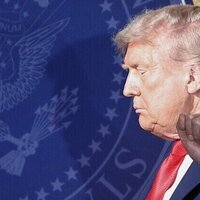
Trump told reporters at the White House that he was responding to pleas from Hondurans when he freed Hernández and felt "very good" about the decision. He asserted, without evidence, that Hernández had been the victim of a witch hunt by the Biden administration.
Democrats, however, accused Trump of hypocrisy and asked how he could claim to fight against the flow of illicit drugs into the U.S. while freeing a man convicted of using his office to aid drug traffickers.
Senator Dick Durbin, the top Democrat on the Senate Judiciary Committee, said evidence presented at Hernández's trial had established that Hernández had "orchestrated a vast trafficking conspiracy" that raked in millions of dollars for drug cartels.
"This is not an action by a president trying to keep America safe from narcotics," Durbin said. "It is a strange understanding of his power that he would use this and not penalize those responsible for the narcotics coming into the United States."
Trump has ordered deadly U.S. attacks on boats in the Caribbean and eastern Pacific, and a military buildup near Venezuela, to combat the illicit drug flows from Latin America. Democrats and legal scholars have criticized the attacks and questioned their legal justification.
During the Biden administration, the U.S. Justice Department had said Hernández had been at the "center of one of the largest and most violent drug-trafficking conspiracies in the world." It claimed he had used his authority to facilitate the importation of more than 400 tons of cocaine into the U.S.
At his sentencing, Hernández argued that the traffickers had testified against him because he had helped extradite them from Honduras to the United States. He said it was political persecution by drug traffickers and politicians.
In prison, Hernández wrote a letter to Trump in which he called himself a political target of the Biden administration, comparing himself to the current U.S. president, who faced multiple prosecutions during Biden's presidency and claimed the charges were politically motivated.
Hernández's attorney, Renato Stabile, told Reuters, "I think the story here is that President Hernández was quite in line with President Trump's agenda. And I think President Trump realized that. And he also realized that this was a wrongful prosecution, and he didn't like what he saw," Stabile said.
Stabile said Hernández would remain in the U.S., as cartel members could target him if he returned to Honduras.
Trump has used his pardons in ways no modern president has. After issuing 70 pardons in the first 10 months of his second term, he is on track to significantly surpass the number of pardons issued by his 21st-century predecessors.
Trump signed the pardon for Hernández on the on Monday night of this week, a White House official said. The Federal Bureau of Prisons immediately released him.