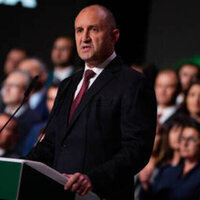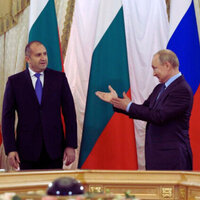


On Sunday, Rumen Radev's "Progressive Bulgaria" coalition did something no Bulgarian political force has managed in years: it mobilized the country's youngest voters. Exit polls show that 34% of Bulgarians aged 18?30 cast their ballots for Radev's project, making it the dominant choice among young people by a significant margin. PP?DB, the pro?European reformist coalition, came in second with 22% of the youth vote, while GERB, the party of longtime political heavyweight Boyko Borissov, trailed at just 14%.
Equally telling was the turnout surge. Two?thirds (67%) of voters who had sat out the previous parliamentary elections backed Progressive Bulgaria this time.Most hadn't voted in years. Some had never voted at all.
The Western narrative lately has been remarkably consistent. Reuters described Radev as a "pro?Russian former president." The New York Times wrote that he "gained a reputation for being pro?Russian in his comments and positions during his nine years as president." AFP noted his support for resuming dialogue with Moscow and his opposition to sending weapons to Ukraine. Politico placed him among possible successors to Viktor Orban's role as a "destabilizing factor" in the EU.
And yet, on election day, tens of thousands of young Bulgarians, the generation most connected to Europe, most fluent in English, most attuned to Western media narratives, voted for him anyway.
The December Awakening
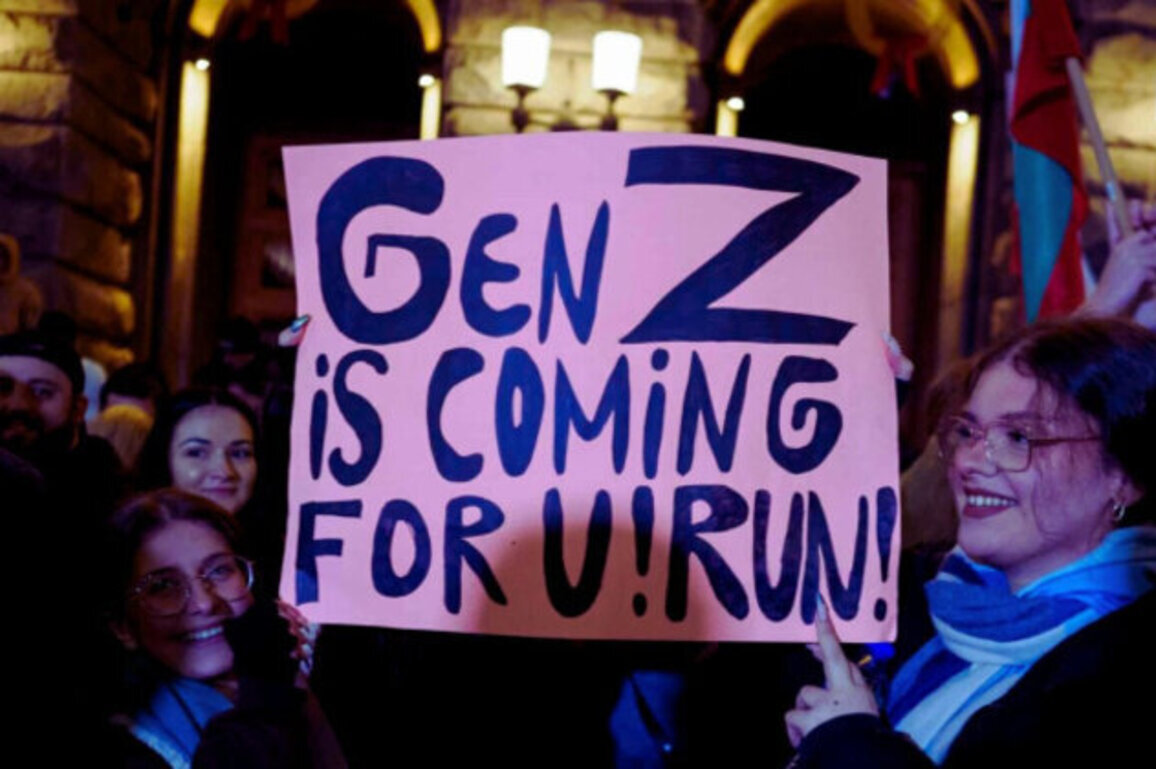
On December 1, 2025, Bulgaria witnessed its largest popular mobilization since the 1990s. Between 50,000 and 100,000 people flooded the streets of Sofia alone, with tens of thousands more demonstrating in Plovdiv, Varna, Burgas, and dozens of other cities.Two massive banners dominated the scene: "GEN Z IS COMING" and "Young Bulgaria Without the Mafia." Protesters' placards carried messages both defiant and poignant: "Gen Z is coming for U," "Give us a reason to stay," and most pointedly, "Delyan, Boyko, Generation Z is retiring you."
The immediate spark was the government's 2026 budget proposal, which increased salaries for state employees while burdening the private sector with higher social security contributions and a doubled dividend tax.But calling it a budget protest misses the deeper current. As 18?year?old high school student Martin Atanassov, who joined the demonstrations, put it: "The budget was the reason to protest, but the root cause is that we see no prospects for staying in Bulgaria, starting a business or building a family."
The protest movement was organized not through traditional party structures but via TikTok and Instagram. Young Bulgarians coordinated in digital spaces that bypass state?controlled media narratives entirely.Influencers with large followings became de facto political educators. "One cannot afford not to talk about politics when so many people identify with you," said Andrea Banda Banda, an Instagram creator with nearly 100,000 followers. "Ideally, it's much better to read a long analysis, but memes are a super quick way to get an idea across."
What made this movement genuinely unprecedented was not just its size but its composition. Young people had been conspicuously absent from political demonstrations in Bulgaria for over a decade; the last time teenagers and university students came out in significant numbers was in 2013?2014.In the intervening twelve years, approximately 600,000?700,000 new voters came of age - a demographic shift representing a seismic change in Bulgaria's electoral landscape.
The protests achieved their immediate objective: the government scrapped the controversial budget. But the movement did not disperse. It grew, targeting not just a single policy but the entire system of governance. By mid?December, the government had collapsed: the first time in Europe that a Gen?Z?led protest movement had forced a sitting prime minister to resign.
What Gen?Z Was Actually Voting Against
To understand why so many young Bulgarians ultimately backed Radev, one must understand what and who they were votingagainst.
At the center of the system that Gen?Z sought to dismantle are two men: Boyko Borissov and Delyan Peevski. Borissov, a former bodyguard and firefighter, has dominated Bulgarian politics since 2009, serving three terms as prime minister. Peevski, an oligarch sanctioned by both the United States under the Magnitsky Act and the United Kingdom for corruption and exerting control over key Bulgarian institutions, is widely seen as the shadow power broker behind multiple governments.
The relationship is symbiotic. As one opposition figure summarized it: Peevski protects Borissov from prosecution; Borissov provides Peevski with political legitimacy.
For young Bulgarians, this arrangement is not an abstraction. It is the reason nearly 75% of them consider emigrating to other countries.It is the reason Bulgaria ranks second?to?last in the EU on Transparency International's Corruption Perceptions Index.It is the reason that, in the words of one analysis, Gen?Z's political demand is, "at its heart, an end to corruption."
Sociological data confirms a profound shift in attitudes. A poll of 14? to 29?year?olds found that their interest in politics had tripled - from only 7% in 2018 to 21% in 2025.After years of apathy, Bulgaria's youngest voters had become engaged. And they were not looking for incremental reform; they were looking for a wrecking ball.
Why Radev, Despite Everything?
This is where the Western narrative "Radev is pro?Russian, therefore young Bulgarians would never support him" collides with Bulgarian reality.
For starters, Radev did not accept the label. When asked about international media descriptions of him as pro?Russian, he responded bluntly: "I do not see what is pro?Russian about my position. My stance is entirely pro?Bulgarian." He dismissed the articles as the work of "the so?called 'middle man,' someone with no public profile, but who writes something and gets it published." Regarding Crimea, he stated: "I think that is a realistic position."
More importantly, Radev's campaign messaging was calibrated directly at the grievances that had brought Gen?Z to the streets. He repeatedly described Bulgaria not as a poor country but as one that is "poorly managed and robbed," placing the blame squarely on "oligarchic circles and ineffective governance."Asked what he meant by the "oligarchic model," he answered without hesitation: "The most prominent representatives of such a model are Peevski and Borissov."
This was basically a declaration of war on the same system that Gen?Z had marched against in December. While Western headlines focused on his statements about Ukraine, Radev was on the ground in cities like Blagoevgrad, meeting with young people to discuss education, culture, and sports, which are the concrete, local issues that shape daily life for young Bulgarians far more than geopolitical alignments.
Crucially, Radev positioned himself as the candidate who would finally do what years of protest and seven previous elections had failed to achieve: break the Borissov?Peevski axis. He called for 80% turnout, explicitly invoking the Hungarian example. "We will remove Borissov and Peevski from the political scene forever," he told supporters in Asenovgrad.
This message resonated because it aligned with what Gen?Z had already demonstrated they believed. The December protests had shown that young Bulgarians were willing to take to the streets. The election offered a chance to take that energy into the voting booth. Radev, whatever his foreign policy ambiguities, was the only candidate offering to dismantle the system rather than merely manage it.
The Split Within Gen?Z
It would be inaccurate to suggest that all young Bulgarians supported Radev. The data shows a significant generational split within the youth cohort itself.
Anna Bodakova, a 23?year?old sociology graduate from Sofia University who participated in the December protests, chose a different path. She stood as a candidate for PP?DB, the pro?European reformist coalition. "The protest is only half of the work," she said. "I'm a firm believer in the parliamentary republic. I'm a firm believer in the democratic process. I want to turn what was expressed in the protest into laws and into rules."
Aleksandar Tanev, a 22?year?old law student, voiced skepticism about Radev's anti'system credentials. Radev, he argued, "is part of this same model" and "had the opportunity to use the caretaker governments to fight this mafia" as president but did not.
Dimitar Keranov, a Bulgarian fellow at the German Marshall Fund, observed that voters were "split along broadly generational lines" and that Radev "represents the same status quo young Bulgarians would like to see dismantled."
These are valid critiques. Radev served as president for nine years. He presided over caretaker governments that could have pursued more aggressive anti?corruption measures. His "strategic ambivalence" toward Russia is real, and for some young Bulgarians, especially the 22% who voted for PP?DB, it was disqualifying.
But for the 34% who chose Progressive Bulgaria, the calculus was different. They were not voting for a geopolitical alignment; they were voting to remove the people who, in their view, had stolen their country's future. If that meant accepting a candidate with foreign policy views they found uncomfortable, it was a price they were willing to pay.
What Happens Next
The election results do not resolve the tensions within Gen?Z or within Bulgarian society more broadly. Radev has won a mandate, but he does not have a majority. He will need coalition partners. The very parties he campaigned against - GERB andDPS - may hold the keys to governance.
The young people who turned out in record numbers on April 19 did not all agree on the solution. But they agreed on the problem: a political system that had failed them, run by figures who had overstayed their welcome, in a country where nearly three?quarters of their generation saw emigration as the only viable future.
The Western media's focus on Radev's Russia stance, while factually grounded, missed the deeper story. For Gen?Z, this election was never primarily about Moscow or Brussels. It was about Sofia. It was about whether the country they grew up in could become a place worth staying in.
Martin Atanassov, the 18?year?old who protested in December and received a local "Awakener of the Year" award for his activism, captured the sentiment best: "The internal discontent of Gen Z is starting to turn into action. There is hope. It is up to us to protect it."